

Independence as a Cornerstone of Credible Assurance
Independence is the foundation of credible assurance, playing a critical role in managing fraud risk and safeguarding impartial, trustworthy outcomes.
Fraud, conflicts of interest, and undue influence present ongoing risks to the integrity of sustainability assurance. ASI’s Anti‑Fraud and Corruption Guidance (2025) highlights how these risks can arise at any stage of the assurance lifecycle and reinforces the importance of strong organisational controls, professional scepticism and ethical conduct in the industry. Central to these safeguards is independence.
Unlike assurance models that combine sustainability and carbon assurance with other professional services, our business model is structured for assurance to be a stand‑alone function to protect independence and support unbiased outcomes.
Independence, Integrity and Impartiality in Assurance
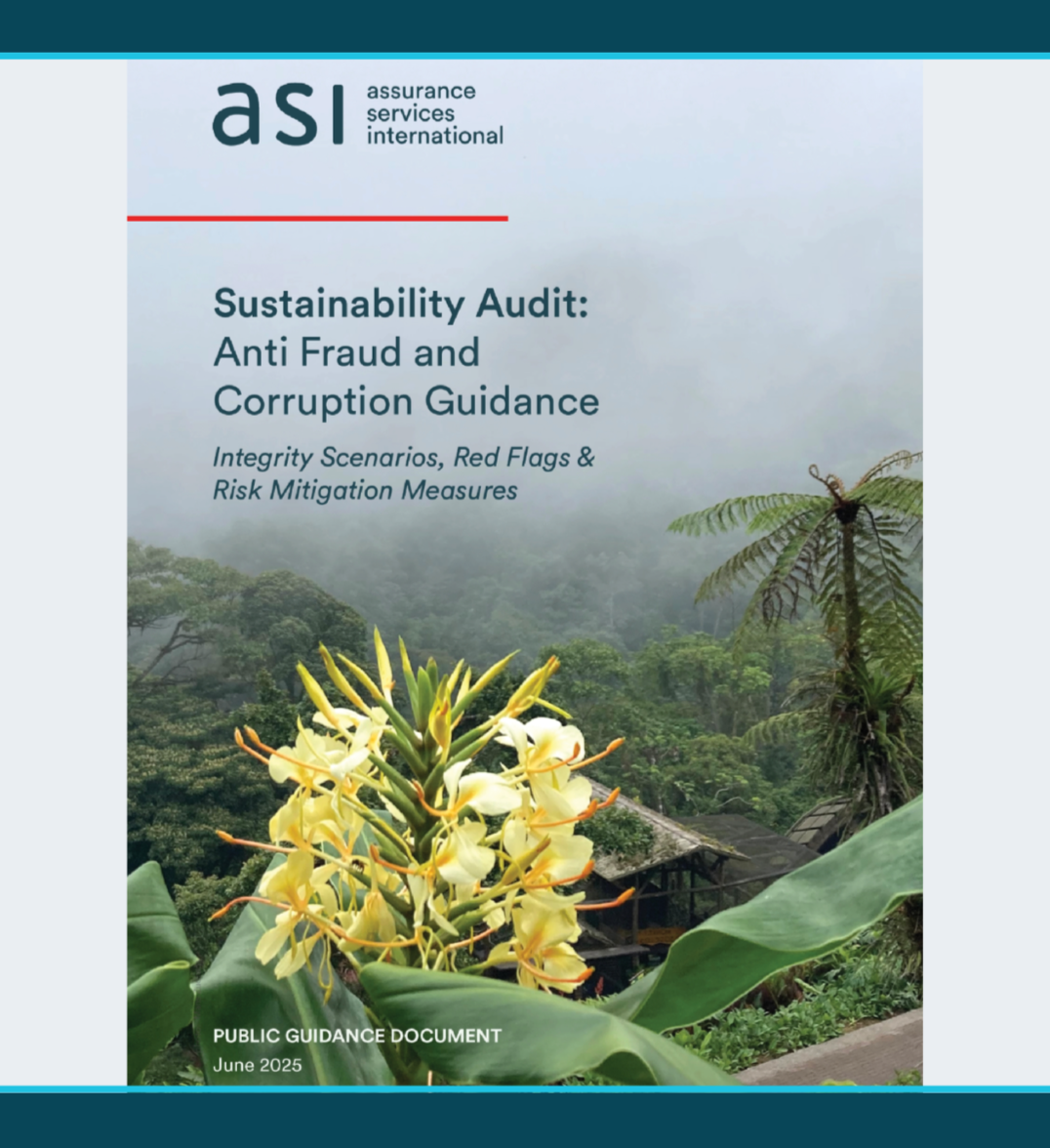
In assurance work, independence underpins integrity, impartiality and transparency. It enables auditors and assurance providers to act objectively, apply consistent judgement and reach evidence‑based conclusions without influence from commercial, financial or other interests.
The ASI guidance demonstrates that integrity risks are often linked to conflicts of interest, pressure on audit outcomes or blurred professional boundaries. A robust independence framework is therefore essential to maintaining confidence in assurance results and the certification systems that rely on them.
Many of the integrity scenarios identified by ASI, such as undeclared conflicts of interest, inappropriate influence and compromised decision‑making, are most effectively mitigated through clearly defined independence requirements. These include documented impartiality processes, clear separation of roles and responsibilities, and controls that support objective audit planning, delivery and reporting.
Embedding these principles within a quality management system supports a risk‑based approach to assurance and strengthens the reliability of audit outcomes.
Our Approach to Independent Assurance
Our assurance engagements are conducted within a quality management system that places independence, integrity and impartiality at the centre of all operations. We do not provide any other professional services that could impair, or be perceived to impair, our independence. In practice, this means we do not provide advisory services, source emission factors, sell carbon credits or measurement and reporting platforms.
This structural independence supports objective decision‑making across the full assurance cycle, including auditor selection, audit execution, review and certification decisions. It also enables us to apply professional judgement without undue influence and to address identified risks in a consistent and transparent manner.
Supporting Confidence in Assurance Outcomes in Aotearoa New Zealand
Independence is fundamental to maintaining trust in assurance outcomes for regulators, scheme owners, certified organisations and other stakeholders. By aligning our assurance practices with the principles set out in ASI’s guidance, and by embedding independence within our governance and quality systems, we support credible, fraud‑resistant assurance in the New Zealand context.
Independence is not an operational constraint; for us, it is a deliberate quality choice. By maintaining a clear and exclusive focus on assurance, we strengthen the integrity of our work and the confidence that stakeholders can place in its outcomes.
Feel free to contact us at info@mchugh-shaw.co.nz to discuss your assurance requirements or request our free GHG Protocol Scope vs ISO Category Comparison Table. We have over 15 years of experience, and complete ISO 14064-1, GHG Protocol, ISO 14067, Airport Carbon Accreditation, Eco Choice Aotearoa, Product Stewardship and Aotearoa New Zealand Climate Standard assurance.
Last Updated March 2026